Last weekend, when I riding my bike on the way home from lunch, I came across the scene of a minor car accident. The accident was between two middle aged men, one of them drove a minivan and the other was a taxi driver. Even before I pedaled up to the scene, the voices of the two men discussing things amongst themselves were audible from far off. A crowd had gathered, and they too joined in the deliberations. There was a sole policeman amongst them, but he didn’t say much at all and just seemed to be monitoring the situation. The regional accents from both men came out in full force and it was a bit difficult to follow exactly what they were saying, but I did manage to get a general idea of what was transpiring, and the outcome was much different than what would occur in the west.
Apparently, the crowd joined in and started voicing their opinion because they were encouraging the minivan driver to settle matters with the cab driver in cash. In the end, the van driver gave the cab driver what seemed to be 300 RMB (~$42) and they both went their separate ways. I’ve been told that many laws here in China are like guidelines to be loosely followed and I guess this was a good example. Everything seemingly worked out fine and the police were on-site to ensure no-one was hurt.
Last week, we went on a cultural excursion with our entire cohort to visit a historical site that is not only famous in Nanjing but is also well known throughout the entire country. This site is the Ming Xiaoling mausoleum at Purple Mountain. This site is where the founding emperor of the Ming dynasty, Zhu Yuanzhang is buried as well as the first ruler of the Republic of China, Sun Yat-sen. There are also many famous rulers throughout China’s very long history that have been buried here. They all chose this location because within the idea of Fengshui, this location is very ideal. Where the tombs are located, there is a mountain in the rear and water in the front as well as amazing views of the entire city.
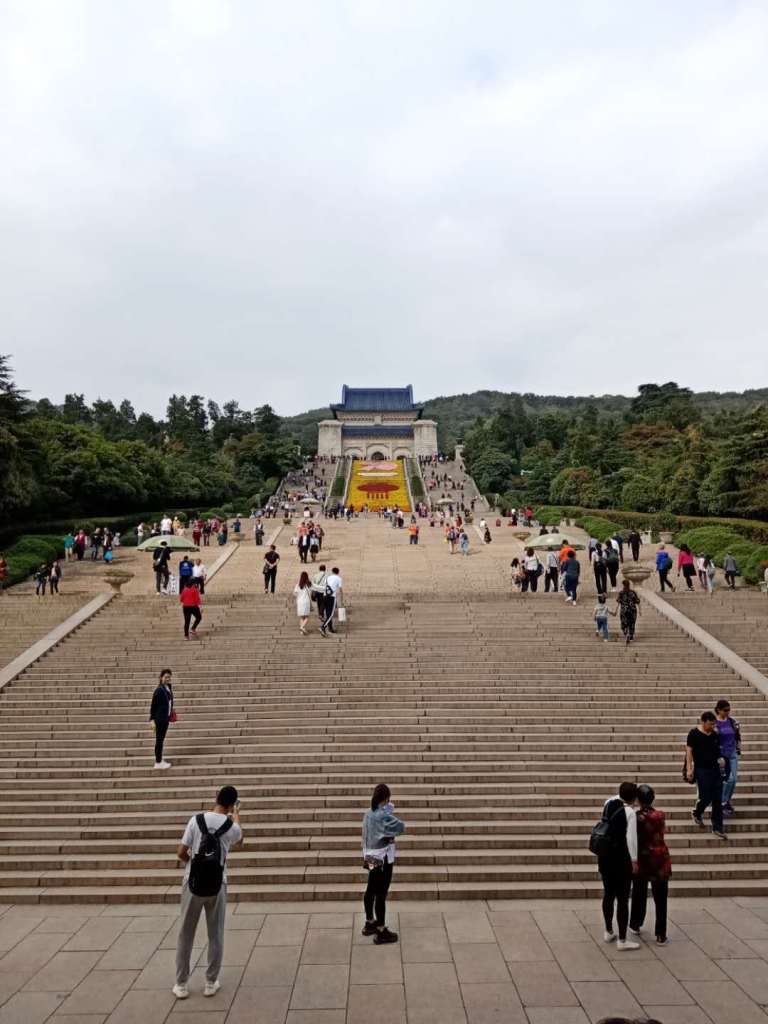
Ancient rulers believed in ensuring that their life after they died would mirror their life on earth. Before visiting here, I haven’t heard of this way of viewing death. Therefore, they would build very large and extravagant mansion underground that matched or even surpassed the mansions they enjoyed above ground. These mansions would sometimes take over 20 years to build and were full of precious belongings and valuables. People close to the rulers would also be included with this process, so when they the ruler died, all of his concubines would be killed and buried with him. In the tomb of one ruler that our teacher mentioned, the remains of over 40 concubines was found. And here I thought some of the very rich individuals in modern society were wasteful, it could be much worse obviously.
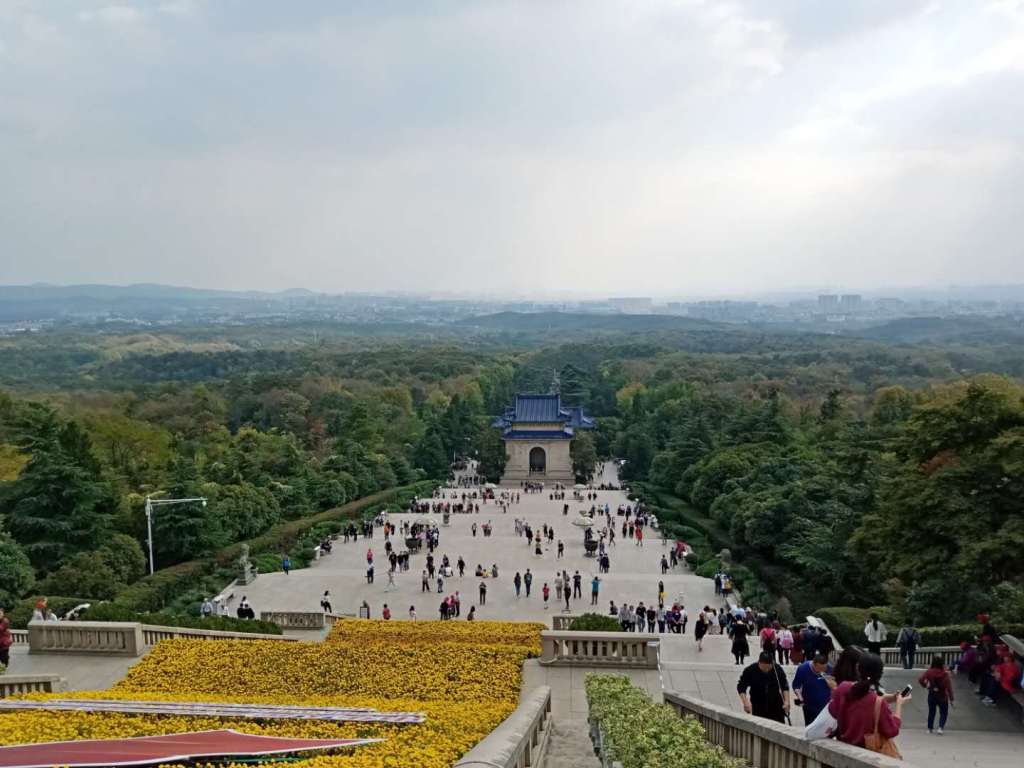
On one hand, this is a practical way of viewing death, that doesn’t include any extremes of a perfect utopia like heaven or eternal damnation like hell, rather whatever one sets up for themselves while on earth will be what they have available to them when they die. It is simply crossing from one realm to another. On the other hand though, what about everyone else that isn’t privileged enough to have been born into nobility. At any rate, it is very insightful to get a glimpse of how different cultures view something that everyone must face some point.
 Tony in China